

The Innovation of Design in Rotational Molding
In recent years, rotomolding has evolved from being merely a manufacturing process to becoming part of the design world, with a growing awareness of its creative potential. This advancement opens up opportunities for innovative products, new market niches, and previously unimaginable solutions, making the technology increasingly strategic.
The Rotomolding is expanding in a continuous and progressive manner, opening up important new opportunities for companies in the sector. This growth raises the level of competition and requires companies to 'look ahead,' evolve, and constantly improve the development of new rotomolded products.
The sector continues to constantly search for original ideas, exploring creative forms and solutions. This versatility confirms rotomolding as a technology capable of combining aesthetics, functionality, and high performance, meeting the demands of increasingly demanding markets.
Freedom of Forms
In rotomolding, design gains almost unlimited freedom. It is possible to create complex and innovative partswith organic curves, internal cavities, and unconventional shapes that would be difficult to achieve with other processes. This freedom allows each product to be not only functional but also visually striking, opening up space for creative ideas that capture the market's attention.
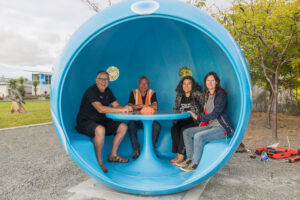
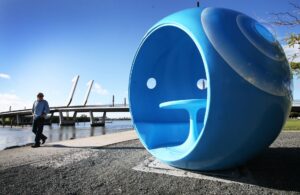
The GiraGlobcreated by designer Joseph Beuys, is a spherical protective structure, made through rotomolding with complex shapes.
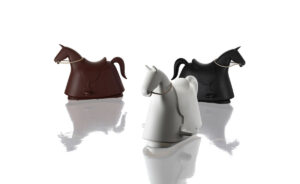
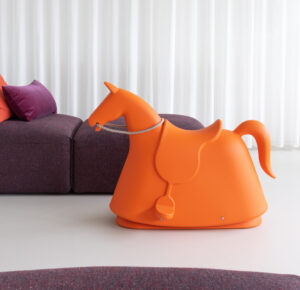
Developed by Australian designer Marc Newson, the Rocky Rocking Horse innovates the toy concept, bringing a creative design that deviates from the norm.
Integration of Function and Aesthetics
One of the main differentiators of rotomolding is its ability to combine beauty and performance. Products can be ergonomic, lightweight, and durable at the same time. In everyday life, this translates into solutions that work perfectly while also being visually appealing, whether in urban furniture, agricultural equipment, or household items.

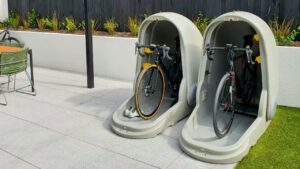
Easily accessible for all types and sizes of bicycles, the Alpen Bike Capsul is a rotomolded capsule that protects the bicycle from natural damage
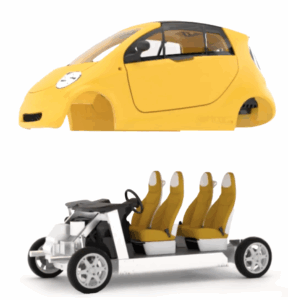

SoftCar: the electric car with rotomolded interior and exterior, featuring a unique and durable design, and much more economical.
Versatility of Materials
The process allows for the exploration of different polymers, colors, and textures, making each product unique. It is possible to create smooth, textured, or semi-transparent parts, combining aesthetics and functionality. This versatility opens doors for customized products that stand out and capture new market niches.
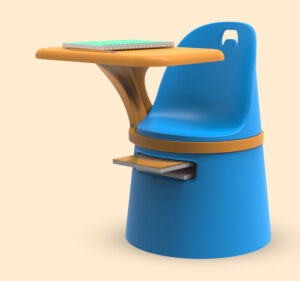
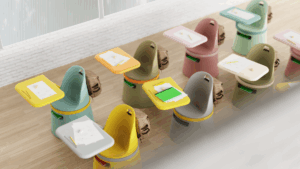
Produced by the Mexican design studio Nos, the Clever is a chair with a table, designed for students. It is entirely made of polyethylene, allowing the use of various colors.
Usability and Comfort
Design combined with rotomolding not only impacts the aesthetics or innovation of the product but also the experience of those who use it. Well-designed products become more ergonomic, intuitive, and pleasant to handle, while maintaining strength and durability. This combination of form, function, and usability transforms everyday objects into practical and efficient solutions, demonstrating how design and technology can improve the life of the end consumer.
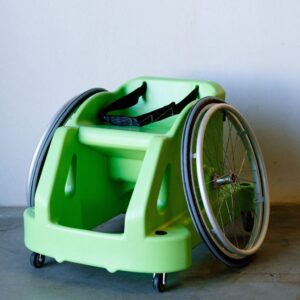
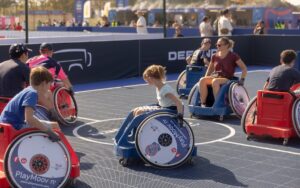
Developed by Wally Salvan, the PlayMoovin wheelchair was created for children with disabilities to be able to practice sports. It features a rotomolded seat, making it six times less expensive than sports wheelchairs.
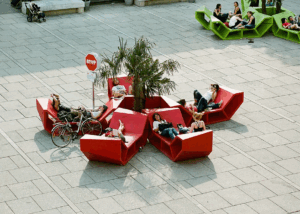
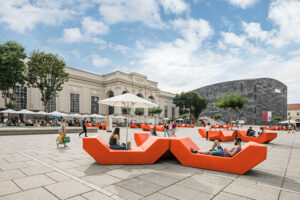
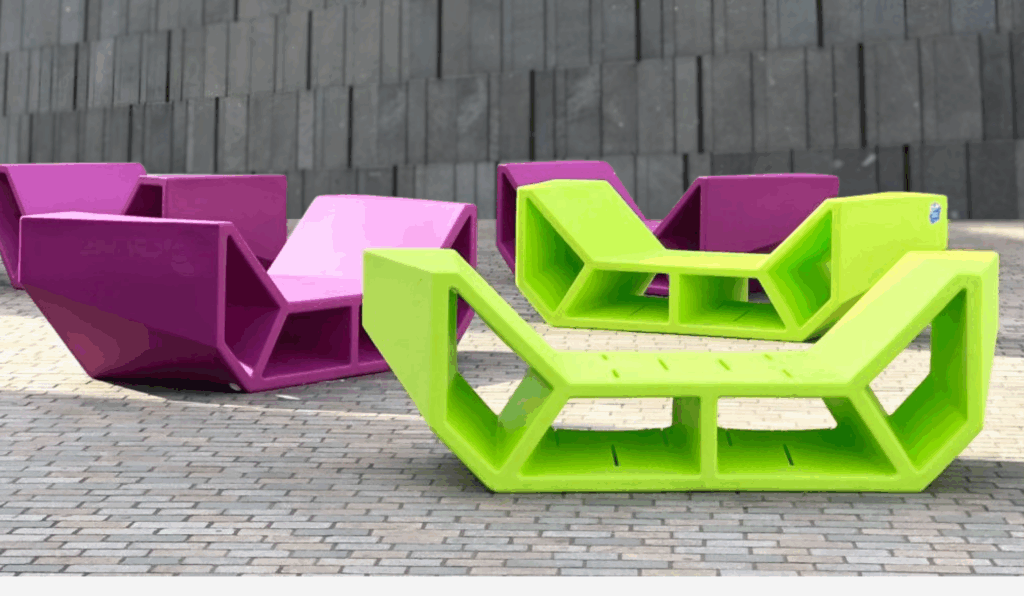
Architects Anna Popelka and Georg Poduschka created the Enzos: abstract forms open to a variety of interpretations by users. In the summer, they become lounges for relaxation, and in the winter, they can be placed vertically to form fences or igloos.
Sustainability and Innovation
In addition to creativity, rotomolding promotes more conscious solutions. With material optimization and waste reduction, designers can develop durable and even recyclable products. Thus, it is possible to combine innovation, aesthetics, and environmental responsibility — something increasingly valued by consumers and companies.
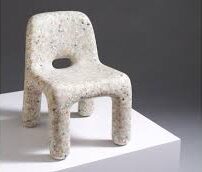
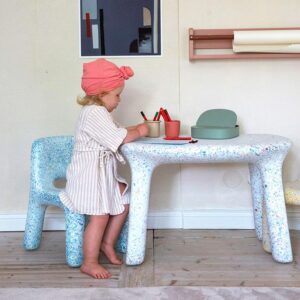
EcoBirdy: rotomolded children's furniture made 100% from recycled plastic – and they can be recycled again!
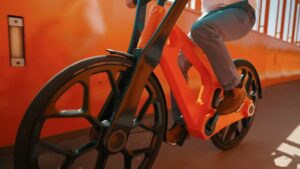

Recycled Polymers: The rotomolded bicycle from the German company Mtrl , made almost entirely of plastic.
Rotomolding demonstrates how design and technology can go hand in hand, transforming creative ideas into real, functional, and visually impactful products. With its machines, Rotoline enables companies and designers to explore new shapes, materials, and innovative solutions, opening up markets and meeting increasingly demanding needs. In a landscape where aesthetics, performance, and sustainability converge, the potential of rotomolding is unlimited — and the future of design continues to be shaped along with it.